.jpg?w=360&h=360)
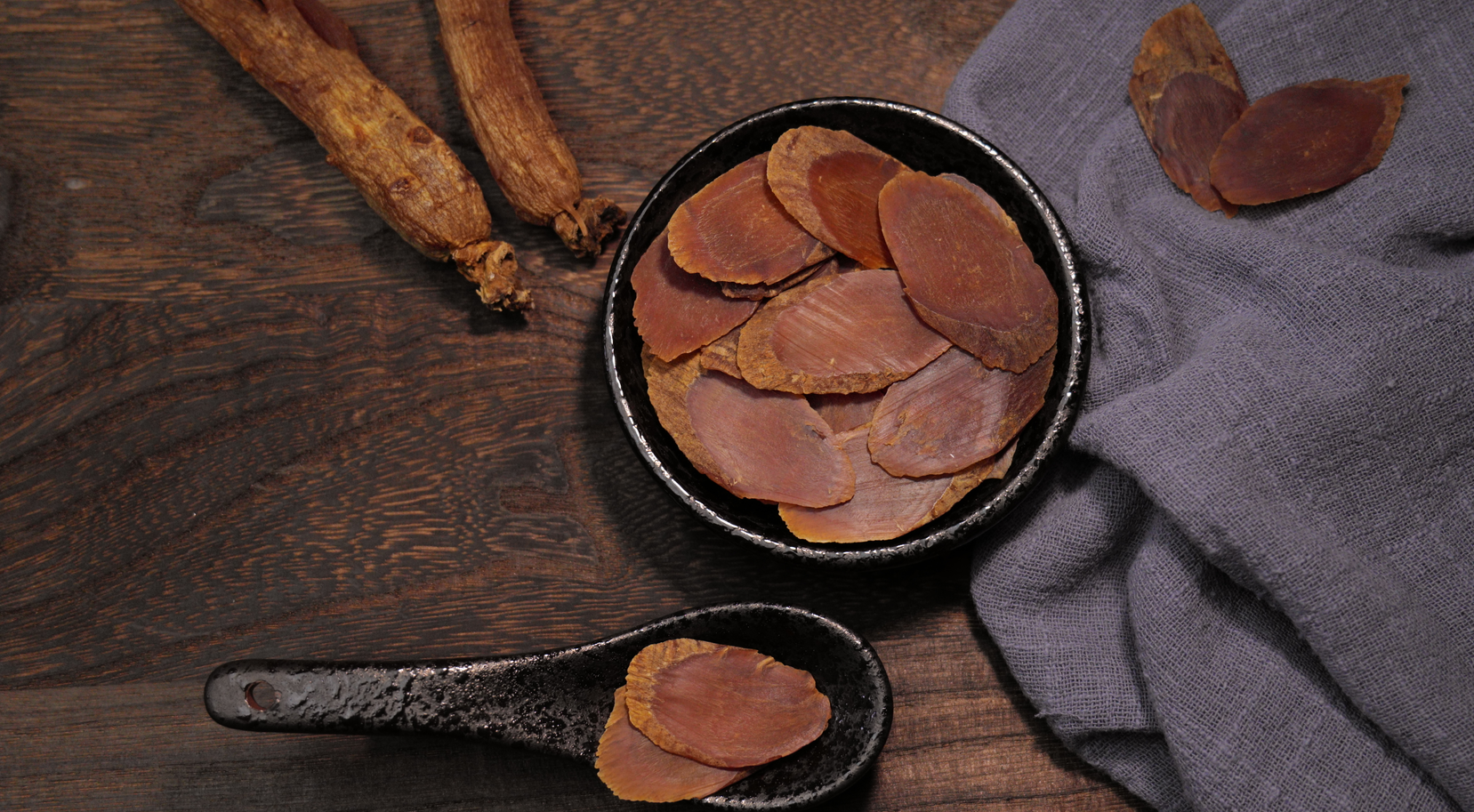
1. People who should avoid ginseng: The following people should not consume ginseng.
- Contraindicated for those with excess heat syndrome
Ginseng is warm in nature (or neutral) and has a strong qi-tonifying effect. If there is excess heat in the body (such as high fever, irritability, flushed face and red eyes, constipation, swollen and painful gums, etc.), consuming ginseng may exacerbate the ‘heat pathogen,’ leading to symptoms such as ‘heat toxicity,’ dry mouth and throat, and nosebleeds.
For example, during the initial stage of a cold with fever or during the acute phase of inflammation (such as pneumonia or tonsillitis), consumption should be avoided. - Those with internal damp-heat should use with caution
Those with a damp-heat constitution (characterised by a thick yellow tongue coating, abdominal distension, bitter taste in the mouth, and sticky stools) may experience ‘trapping the pathogen inside’ when consuming ginseng, exacerbating damp-heat stagnation and leading to symptoms such as indigestion and a heavy feeling in the body. - Those with qi stagnation should avoid
Those with qi stagnation (such as depression, chest tightness, rib discomfort, and belching) may experience qi stagnation due to excessive qi tonification when taking ginseng, exacerbating stagnation symptoms and potentially causing irritability and insomnia. - Patients with impaired kidney function or kidney failure
Ginseng contains multiple saponin components, and excessive intake may increase the metabolic burden on the kidneys. Those with impaired kidney function should use it under medical supervision. - Pregnant women and infants
Pregnant women: Ginseng may stimulate the uterus or affect hormone levels. It should be used only after assessment by a traditional Chinese medicine practitioner, and should not be taken without consultation.
Infants: Infants have delicate constitutions and do not require excessive tonification. Overuse may lead to premature puberty or ‘heat’ conditions.
2. Contraindications for combination use: These drugs/foods should not be taken together.
- Traditional Chinese Medicine ‘Eighteen Contraindications’ and ‘Nineteen Fears’ Related Contraindications
Traditional medicine holds that ginseng should not be used in combination with Lepidium (Eighteen Contraindications: ‘All ginseng and peony contraindicate Lepidium’), as their combination may produce toxicity or reduce efficacy; it should also be avoided with Pentaglottis (Nineteen Fears: ‘Ginseng most fears Pentaglottis’), as Pentaglottis may weaken ginseng's qi-tonifying effects. - Avoid using with qi-dispersing herbs
Ginseng tonifies qi, while herbs like Raphanus sativus (radish seeds), Citrus aurantium, and Ziziphus jujuba specialise in dispersing qi and resolving stagnation. Using them together may counteract ginseng's qi-tonifying effects and reduce efficacy. - Avoid taking with strong tea or coffee
Strong tea and coffee contain tannic acid, which can bind with ginsenosides in ginseng, impairing the body's absorption of ginseng's active components. It is recommended to avoid drinking strong tea or coffee for 1–2 hours after taking ginseng. - Avoid taking with raw, cold, or greasy foods
Cold foods (such as iced drinks and raw fish) can damage the spleen and stomach, while greasy foods (such as fatty meats and fried foods) are difficult to digest. Both can impair the absorption of ginseng and reduce its tonifying effects.
3. Precautions for consumption
- Control dosage to avoid overuse
General health maintenance: The recommended daily dosage for adults is generally 3–9 grams (dried product). Fresh products may be used in slightly larger quantities, but should not exceed 15 grams.
Overuse hazards: May cause ‘ginseng abuse syndrome,’ characterised by insomnia, irritability, high blood pressure, headaches, palpitations, and even nosebleeds and mental excitement. - Select varieties based on constitution
Those with a hot constitution or prone to heatiness: Choose American ginseng ( cool in nature, with a cooling and tonifying effect).
Those with a cold constitution and sensitivity to cold: choose red ginseng or Korean ginseng (warm and nourishing).
Those with a balanced constitution and mild qi deficiency: choose white ginseng (neutral and nourishing).
(For details, please refer to the ‘Properties of Ginseng’ section above to avoid ‘incorrect nourishment’.)
- Be careful about when to take it
Best time: Take in the morning or early afternoon, aligning with the body's ‘rising yang energy’ rhythm, and avoid taking at night (to prevent nervous system stimulation and sleep disruption).
Take on an empty stomach: Take 1 hour before meals or 2 hours after meals for better absorption; those with weak spleen and stomach can take after meals to reduce gastrointestinal irritation. - Suspension of use in special circumstances
During acute illnesses such as colds, fever, or diarrhoea, use should be suspended to avoid ‘trapping the pathogen inside,’ which could worsen the condition.
If discomfort such as heatiness, abdominal distension, or insomnia occurs after use, discontinue immediately and consult a traditional Chinese medicine practitioner for adjustment of the regimen if necessary.