.jpg?w=360&h=360)
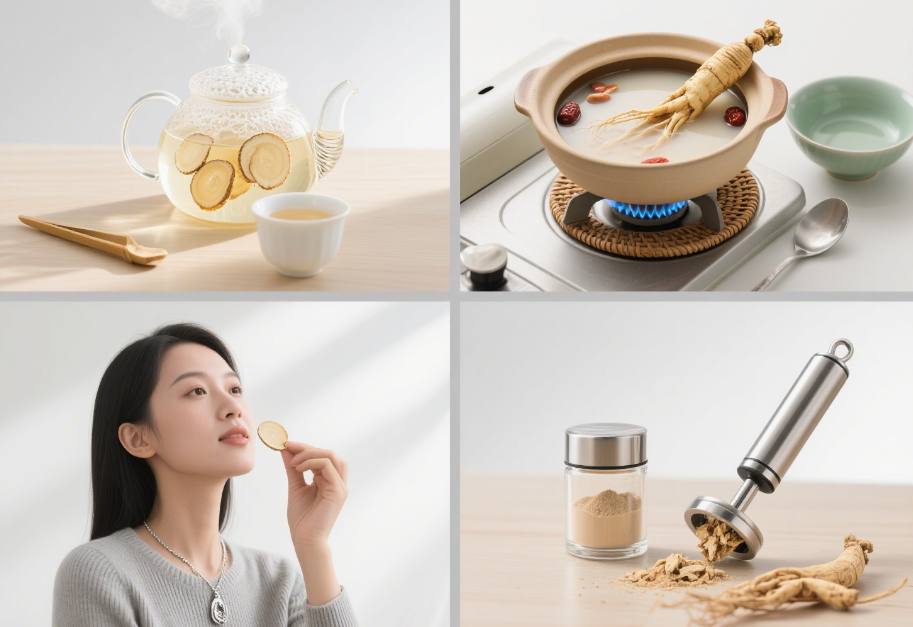
1. Basic combination: harmonize flavors and enhance absorption
For “warming ginseng” (red ginseng, Korean ginseng): neutralize the warming and drying properties
Combine with yin-nourishing ingredients: alleviate its heating properties and prevent internal heat
- Red ginseng + Ophiopogon/Polygonatum: Red ginseng tonifies qi and warms yang, while Ophiopogon and Polygonatum nourish yin and moisten dryness. Suitable for those with qi deficiency accompanied by dry mouth and tendency to overheat (e.g., 3g red ginseng + 5g Ophiopogon, boiled in water or simmered in soup).
- Korean ginseng + dendrobium: Korean ginseng is warming and tonifying, while dendrobium nourishes yin and the stomach, suitable for those with spleen-stomach deficiency-cold and yin deficiency (e.g., boil Korean ginseng slices with dendrobium and drink as tea).
Combine with qi-regulating ingredients: Avoid qi stagnation (abdominal distension) - Red ginseng + dried tangerine peel: Red ginseng tonifies qi, while dried tangerine peel regulates qi and strengthens the spleen, suitable for those with weak spleen and stomach function and prone to abdominal distension (add 3–5 grams of dried tangerine peel when stewing soup).
2. For “neutral/cool tonic ginseng” (white ginseng, American ginseng): Enhance specificity
White ginseng (neutral): Suitable for those with mild qi deficiency, can be paired with spleen-tonifying ingredients to promote absorption
- White Ginseng + Yam / Lotus Seed: White Ginseng tonifies qi, while yam and lotus seed strengthen the spleen and nourish the stomach. Suitable for those with qi deficiency accompanied by poor appetite and indigestion (add to porridge: 3g white ginseng, 20g yam).
American ginseng (cool nature): Suitable for those with both qi and yin deficiency and prone to heatiness, paired with yin-nourishing and moisture-generating ingredients - American ginseng + goji berries / lily bulbs: American ginseng tonifies qi and nourishes yin, goji berries nourish the liver and kidneys, and lily bulbs moisten the lungs. Suitable for those experiencing dry mouth, fatigue, and dry cough after staying up late (slice and steep with goji berries as a tea substitute).
2. Functional combinations: Adjust as needed for targeted nourishment
a. Tonify qi and nourish blood: Suitable for deficiency of both qi and blood (pale complexion, fatigue, palpitations)
Ginseng + Angelica sinensis / Jujube: Ginseng tonifies qi, Angelica sinensis nourishes and activates blood circulation, and jujube strengthens the spleen and nourishes blood. “Qi can generate blood,” enhancing the blood-nourishing effect.
Usage: 5g ginseng + 3g angelica + 5 jujubes, boiled in water or simmered in chicken soup (suitable for post-menstrual and postpartum recovery in women).
Ginseng + Astragalus + Longan: Ginseng and Astragalus tonify qi, while Longan nourishes blood and calms the mind. Suitable for those with significant qi deficiency (easily fatigued) and blood deficiency (insomnia, forgetfulness).
b. Strengthen the spleen and stomach: Suitable for those with weak spleen and stomach (abdominal distension, loose stools, poor digestion)
Ginseng + Atractylodes + Poria: The classic “Four Gentlemen Decoction” (ginseng, Atractylodes, Poria, licorice) replenishes qi and strengthens the spleen, suitable for those with poor appetite and weakness due to spleen and stomach qi deficiency.
Usage: 3g of ginseng + 5g of Atractylodes macrocephala + 5g of Poria cocos, boiled in water or stewed with lean meat (a small amount of ginger can be added for flavor).
Ginseng + Yam + Millet: Cooked as porridge, ginseng tonifies qi, yam strengthens the spleen, and millet nourishes the stomach, suitable for daily regulation of the spleen and stomach, mild and non-irritating.
c. Nourishing Yin and Moisturizing Dryness: Suitable for both qi and yin deficiency (dry mouth, night sweats, fatigue)
Ginseng + Ophiopogon + Schisandra: The classic “Shengmai Decoction,” which tonifies qi, nourishes yin, stops sweating, and generates body fluids. Suitable for summer heat exhaustion, or those who have been staying up late or overexerting themselves for an extended period of time.
Usage: 5g American ginseng (preferred) + 10g Ophiopogon + 3g Schisandra, boiled as tea or taken as a decoction.
Ginseng + Silver Ear Mushroom + Rock Sugar: Ginseng tonifies qi, while silver ear mushroom nourishes yin and moistens the lungs, suitable for those with both qi and yin deficiency accompanied by dry cough and dry skin (simmered as soup or dessert, using white ginseng or American ginseng is preferable).
d. Warming Yang and Dispelling Cold: Suitable for those with Yang deficiency (fear of cold, cold hands and feet, prone to diarrhea)
Ginseng + Ginger + Lamb: Red ginseng or Korean ginseng warms and tonifies Yang, ginger dispels cold, and lamb warms the kidneys. Suitable for those with Yang deficiency and fear of cold in autumn and winter, warming the body and tonifying Qi and blood.
Usage: 5g red ginseng + 3 slices of ginger + 200g lamb, stewed in soup (can add a small amount of Angelica sinensis for flavor).
Ginseng + Deer Antler (small amount): Ginseng tonifies qi, while deer antler warms and tonifies kidney yang. This is suitable for those with severe yang deficiency (cold pain in the waist and knees, diminished sexual function), but dosage must be carefully monitored (no more than 1 gram of deer antler per day) to avoid causing internal heat.
3. Simple everyday combinations (suitable for health maintenance)
Tea preparation:
Qi deficiency and fatigue: 3 g of white ginseng + 5 g of astragalus, steep for 10 minutes and drink.
After staying up late: 5g American ginseng + 10g goji berries, steep repeatedly until the flavor fades.
Cooking porridge/soup:
Breakfast porridge: 2g ginseng (sliced) + rice + pumpkin, cook into porridge (suitable for daily health maintenance for those with qi deficiency).
Black chicken soup: 5 grams of ginseng + half a black chicken + 3 red dates, simmer for 1.5 hours (nourishes qi and blood, suitable for women).
Powdered ginseng:
Grind ginseng into a fine powder, take 1–2 grams each time, mix with honey water or warm water (convenient and quick, suitable for busy individuals).
Pairing considerations
Select ginseng varieties based on body constitution: Warm-tonifying types (red ginseng, Korean ginseng) are suitable for those with a cold and deficient constitution, and should be paired with yin-nourishing ingredients to prevent heat accumulation; cool-tonifying types (American ginseng) are suitable for those with a hot constitution, and should avoid being paired with cold foods (such as mung beans).
Use in moderation: For health maintenance purposes, a daily dosage of 3–5 grams of ginseng is sufficient. Ingredients or herbs used in combination should also be used in moderation to avoid “over-tonification.”
Progress gradually: For first-time users, start with a small dose and observe the body's response (if no symptoms such as heatiness or abdominal distension occur, gradually increase the dosage).