.jpg?w=360&h=360)
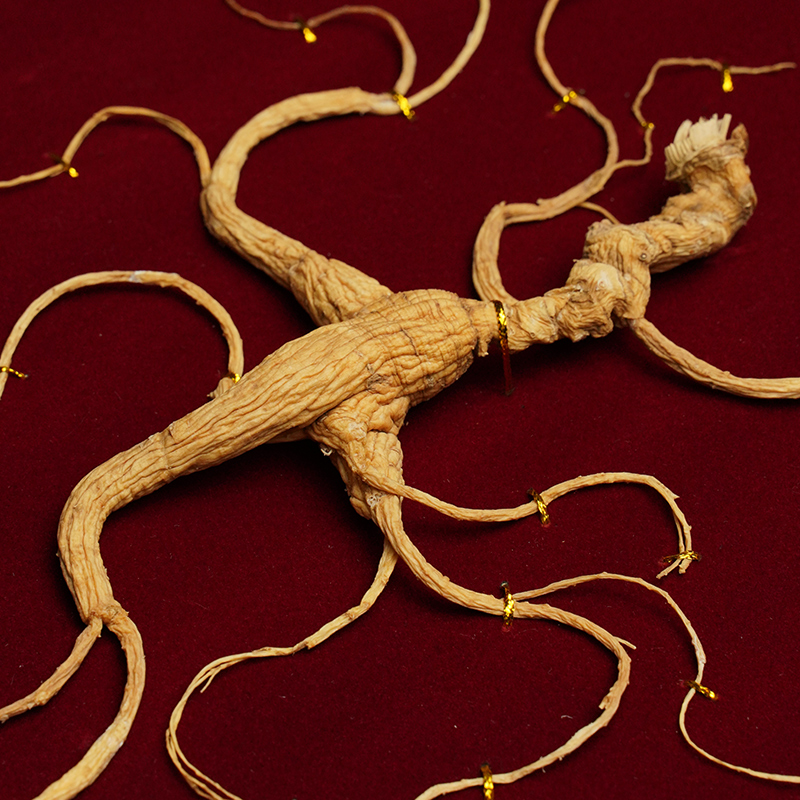
Korean red ginseng has earned a global reputation as a premier health supplement, but you might wonder why most premium products specifically highlight their 6-year growth cycle. The answer lies in a careful balance of botanical science, traditional knowledge, and economic practicality—making 6-year-old ginseng the optimal choice for both efficacy and quality. Here’s a deep dive into the reasons behind this standard.
1. The Ginseng Growth Cycle: Repeak Ginsenoside Maturation
Ginseng is a slow-growing perennial, and its medicinal value depends largely on the concentration of active compounds called ginsenosides. These saponins are responsible for ginseng’s adaptogenic properties, such as boosting immunity, reducing fatigue, and improving cognitive function
-
Years 1–3: The plant focuses on leaf and stem development, with minimal ginsenoside accumulation in the root.
-
Years 4–6: The root rapidly thickens and accumulates ginsenosides, reaching peak levels by year six
-
Beyond 6 years: The root’s quality declines. It becomes woody, vulnerable to disease, and may show reduced ginsenoside consistency due to structural decay
Research confirms that ginseng harvested at 6 years contains the highest density of ginsenosides, with up to 1.4–2 times more active compounds than 4-year-old roots. This peak potency is why Korean regulations, such as those enforced by the Korea Food & Drug Safety Ministry, designate 6-year ginseng as the standard for health-functional foods .
🧪 Key Insight: Studies show that ginsenosides like Rb1, Rg1, and Rg3—critical for anti-inflammatory and antioxidant effects—are most abundant in 6-year-old roots
2. Why Not Older? The Risks of Over-Aging
While it might seem logical that older ginseng is better, this isn’t the case. Roots grown beyond 6 years face several issues:
-
Structural Degradation: The root’s interior becomes spongy or hollow, reducing its medicinal integrity
-
Disease Susceptibility: Longer growth periods increase exposure to pests, mold, and soil-borne diseases, risking total crop loss
-
Diminished Returns: Ginsenoside levels plateau or decrease after year six, making additional cultivation inefficient .
This aligns with traditional Korean ginseng farming practices, which prioritize quality over quantity. As noted by the Korea Ginseng Corporation, roots harvested at 6 years exhibit a balanced, human-like shape and weigh about 80 grams—the ideal size for high-grade red ginseng .
3. Tradition Meets Science: Historical and Cultural Validation
For centuries, Korean farmers have adhered to the 6-year harvest rule based on observational wisdom. Modern science now validates this practice:
-
Red Ginseng Processing: Fresh ginseng steamed and dried at 6 years produces "red ginseng," which has higher stability and concentrated bioactive compounds than white ginseng
-
Sustainability: Ginseng depletes soil nutrients rapidly. A 6-year cycle allows farmers to rotate crops and maintain soil health
Korean red ginseng brands like KGC (Korea Ginseng Corp) and Zhengguanzhuang use exclusively 6-year roots, leveraging strict government-backed quality controls.
4. Consumer Takeaways: How to Identify Authentic 6-Year Ginseng
When purchasing Korean red ginseng, look for:
-
Clear Labeling: Phrases like "6-Year Root" or "6년근" on packaging.
-
Certifications: seals from Korean regulatory bodies (e.g., Ministry of Food and Drug Safety).
-
Product Forms: Extracts, liquids, or whole roots labeled with the harvest age.
Be wary of products claiming to be older than 6 years—they may be mislabeled or lower in quality.
Conclusion: The 6-Year Standard Isn’t Arbitrary—It’s Essential
The 6-year benchmark for Korean red ginseng is a result of botanical precision, cultural heritage, and rigorous science. By adhering to this timeline, producers ensure maximum potency, sustainability, and consistency—giving consumers a reliably effective product. Whether you’re seeking immune support, enhanced energy, or stress relief, 6-year-old red ginseng remains the gold standard for a reason.